In environmental science, “carrying capacity” is the amount of a particular species that the world (or a particular ecosystem) can sustain. It is different for every species, and there is no way to determine this capacity until it is reached. Populations explode exponentially, then once the carrying capacity is reached, the population has a setback and then fluctuates around that line into the future. The chart below shows a hypothetical example:
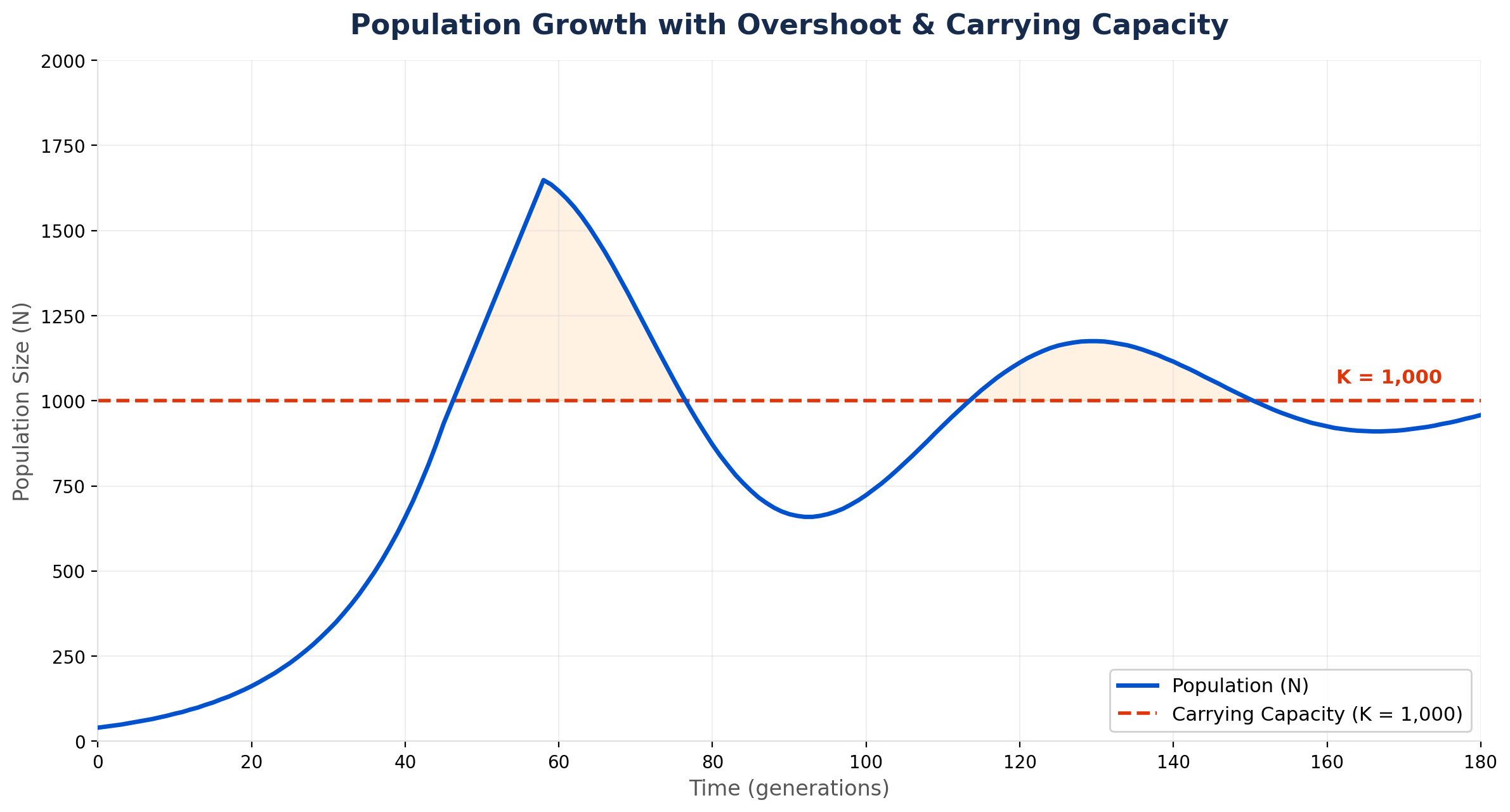
During a recent coaching session, a client said he took on too much work and wasn’t delegating as much as he could (or should). This client, an executive at a nonprofit, studied biostatistics, so I used carrying capacity as relatable example.
In short, I said that, just like carrying capacity, you never know how much you can delegate until you delegate too much and the system corrects itself. “How do you know your delegation capacity?” I asked him. He had no answer.
Just as species rebound, I reminded him that once a follower is delegated too much, it was important for him not to retract all delegated authority and responsibility, but to take a minor step back so he could find the right threshold.
I thought of this idea in relation to the Situational Leadership model, developed by Paul Hersey and Ken Blanchard. They pose that effective leaders should adapt their approach based on the readiness and competence level of the people they're leading. It defines four styles (Directing, Coaching, Supporting, and Delegating), which should match followers' varying combinations of ability and motivation to perform a task. It looks like this chart below. The 'D' levels (D1–D4) describe where the follower is on a given task from enthusiastic beginner (D1) to self-reliant achiever (D4). The 'S' levels (S1–S4) describe the leadership style the leader should use, which balances how much direction (task-specific guidance) and how much support (encouragement, listening, collaboration) to provide.
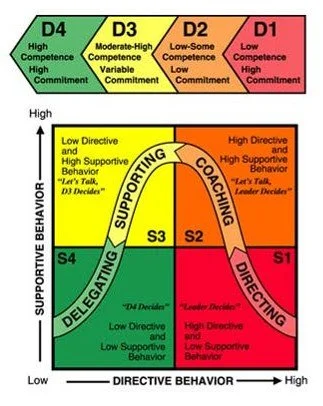
If a person is new to a task, they need to be directed how to do it. Over time, they may gain more competence, but their motivation may change. That requires a different leadership style. The goal is to get to delegation, so you, as the senior leader, can delegate more and free up your schedule to do more of your own strategic work.
Inevitably, you’ll delegate too soon on something. But just as populations of species don’t completely die out after reaching carrying capacity, it’s important not to revert to the Directing style if a delegated task doesn’t go as planned. Correct the overshoot by pulling back slightly and shifting more into the Supporting style. Then, following some corrected behaviors, you can figure out how to get back to Delegating.
You'll never find your delegation capacity by playing it safe. You find it the same way species find carrying capacity, which is by overshooting, correcting, and stabilizing. Leaders who never cross this threshold risk being bottlenecks. By being intentional about this, you can determine your own “Delegation Capacity.”